




A family home, a pension, savings built up over decades. Maybe a business, or agricultural land on the outskirts of the city or across the county. Whatever you've accumulated over your lifetime, it represents years of work, and without a proper estate plan, there's no guarantee any of it ends up where you want it to.
If you die without a Will, the law decides who inherits, and its default rules rarely match what most families would choose. Your partner of twenty years gets nothing if you're not married. Your stepchildren are excluded entirely. Your estate gets divided in a way that may bear no resemblance to your wishes.
If you lose mental capacity without a Lasting Power of Attorney in place, your family can't access your bank accounts, sell your property, or make decisions about your care without applying to the Court of Protection. That process is slow, expensive, and the court may appoint someone you wouldn't have chosen.
If your estate isn't structured properly, your family could face an inheritance tax bill that forces the sale of the family home or the farm. Lincoln property values have risen significantly over the past two decades. A family home that was comfortably below the threshold ten years ago may not be anymore.
These aren't hypothetical problems. They're situations our Lincoln estate planning team sees regularly. And they're almost always avoidable with the right advice at the right time.
Why Lincoln Families Choose Ringrose Law For Estate Planning
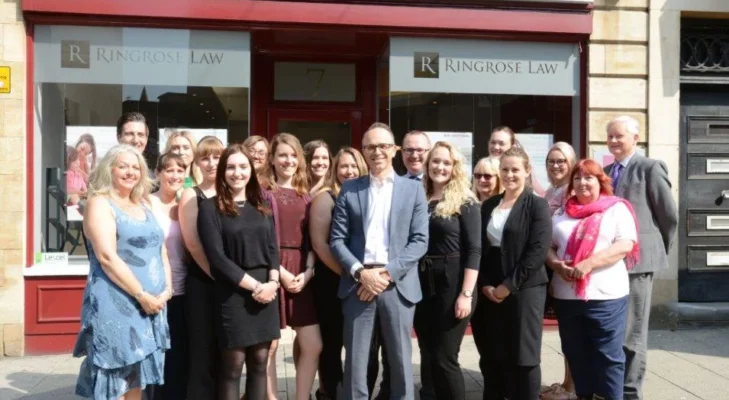
We've been advising families across Lincoln and Lincolnshire on Wills, Trusts, and Estate Planning for over a century. Here's what that experience looks like in practice.
Advice Shaped by How people in Lincoln Hold Their Wealth
Lincoln families don't all look the same financially. Some have most of their wealth tied up in a family home that's risen in value. The difference between a terrace in in the City Centre and a period property in the Bailgate can be the difference between an estate that falls below the inheritance tax threshold and one that doesn't.
Some run businesses in the city or across the county. Some own agricultural land where reliefs like Agricultural Property Relief and Business Property Relief are the difference between the next generation keeping the farm and having to sell it. Some have blended families from second marriages where the inheritance position is more complicated than they realise.
We don't offer template Wills and generic advice. We structure estate plans around how you actually hold your assets, what you want to happen to them, and the specific risks that apply to your situation.
We Think About What Could Go Wrong, Not Just What You Want to Happen
A good estate plan doesn't just say where your assets go. It anticipates the things that could derail your wishes.
What happens if a beneficiary is going through a divorce when they inherit? What if a family member has a disability or mental health condition that means they can't manage a lump sum? What if you need residential care and the local authority assesses your estate to determine how much you pay? What if you own a business that needs to keep running after your death?
We think through these scenarios with you and build in the protections; trusts, life interest arrangements, discretionary provisions, that make sure your plan holds up when it's actually tested. Not just on the day it's signed, but ten or twenty years later when circumstances have changed.
A Long-Term Relationship, Not a One-Off Transaction
Estate plans need reviewing. Marriages, divorces, births, deaths, property purchases, business changes, and changes to tax law can all affect whether your existing plan still does what you need it to.
Many of our Lincoln clients come back to us every few years to update their Wills, adjust their Trust arrangements, or put new Powers of Attorney in place as circumstances change. We keep your documents on file and make the review process straightforward. You don't have to start from scratch each time.
Talk to an Estate Planning Solicitor About Protecting Your Family
Book a consultation, there's no obligation.
01522 561020

The Estate Planning Services Our Lincoln Team Provides
Estate planning covers everything from writing a straightforward Will to structuring complex Trust arrangements for tax efficiency. Here's what our Lincoln team handles.
Wills
A professionally drafted Will is the foundation of any estate plan. It sets out who inherits your assets, who looks after your children if they're under 18, and who you trust to carry out your wishes as executor.
We prepare straightforward single and mirror Wills for couples, as well as more complex Wills involving Trusts, business assets, agricultural property, blended families, and overseas assets. If you already have a Will, we can review it and advise on whether it still reflects your circumstances. A Will written before a marriage, divorce, or significant property purchase may no longer do what you think it does.
We see the consequences of DIY Wills and online templates regularly. Ambiguous wording, missing attestation clauses, and provisions that don't account for changes in the law or family circumstances are common sources of disputes that a professionally drafted Will would have avoided.
Lasting Powers of Attorney
A Lasting Power of Attorney is a legal document that allows someone you trust to make decisions on your behalf if you lose the capacity to make them yourself. There are two types: one for property and financial affairs, and one for health and welfare.
Without an LPA in place, your family cannot access your bank accounts, pay your bills, manage your investments, or make decisions about your care, not even your spouse. They would need to apply to the Court of Protection for a deputyship order, which typically takes several months, costs significantly more, and results in the court deciding who manages your affairs rather than you.
The time to put an LPA in place is now, while you have capacity. Once capacity is lost, it's too late. We prepare both types of LPA, help you choose appropriate attorneys, and handle registration with the Office of the Public Guardian.
Trusts
A Trust allows you to set aside assets for specific people or purposes, with rules about how and when those assets are distributed. Trusts are one of the most flexible tools in estate planning, and they serve a wide range of purposes.
We advise on and prepare:
- Life interest trusts - commonly used in blended family situations to ensure a surviving spouse has the use of the family home while protecting the underlying capital for children from a first marriage.
- Discretionary trusts - where the trustees have flexibility over who benefits and when. Property protection trusts are designed to ring-fence the value of your home, and
- Vulnerable person trusts - which provide for a beneficiary with a disability or mental health condition in a tax-efficient way.
We explain when a trust is appropriate, when it isn't, and what the ongoing tax and administrative implications are so you can make an informed decision.
Inheritance Tax Planning
Inheritance tax is charged at 40% on the value of your estate above the nil-rate band, which is currently £325,000 per person. The residence nil-rate band adds a further £175,000 where you're leaving your home to direct descendants. For a married couple, these allowances can be combined. However, the rules around qualifying for the residence nil-rate band are more complicated than most people expect.
In Lincoln, rising property values mean that more estates are crossing the threshold than a generation ago. A family home worth £350,000, a pension, some savings, and a life insurance policy can add up to an estate with a significant tax bill that your family might not be expecting.
We advise on lifetime gifting strategies, trust-based planning, and the use of exemptions and reliefs to reduce or eliminate the tax your family pays. For business owners, Business Property Relief can provide up to 100% relief on qualifying business assets. For farming families, Agricultural Property Relief does the same for qualifying agricultural land and property. That said, the eligibility rules are specific and need careful planning to get right.
Estate Administration and Probate
When someone dies, their estate needs to be administered. Debts paid, tax settled, and assets distributed according to the Will or the rules of intestacy. We handle the full probate process: applying for the grant of probate, valuing the estate, completing the inheritance tax return, settling liabilities, dealing with property transfers through the Land Registry, and distributing assets to beneficiaries.
We act as executors where families prefer an independent professional to manage the process, and we support executors who want guidance on their legal responsibilities without handing everything over.
If a Lincoln property forms part of the estate, we can independently advise on the valuation, any sale or transfer, and the conveyancing alongside the probate process to keep things simple.
Intestacy Solicitors Probate Solicitors Conveyancing Solicitors
Court of Protection and Deputyship
If someone has already lost mental capacity without an LPA in place, an application to the Court of Protection is the only route to gaining legal authority over their affairs.
We handle deputyship applications for property and financial affairs. This covers bank accounts, investments, property, and bill payments, as well as health and welfare decisions where these are needed. Deputyship comes with ongoing reporting obligations to the Office of the Public Guardian, and we can advise on or manage those requirements.
This is a situation we see all too often with elderly relatives in Lincolnshire care homes, where families realise too late that no one has the legal authority to manage a parent's finances or make decisions about their care.
Court of Protection Solicitors
Contested Wills and Inheritance Disputes
Not all estates are administered smoothly. Disputes can arise between beneficiaries, between executors and beneficiaries, or from family members who feel they haven't been adequately provided for.
We handle claims under the Inheritance (Provision for Family and Dependants) Act 1975, which allows certain categories of people, including spouses, children, cohabitants, and dependants, to apply to the court for reasonable financial provision from an estate. We also advise on challenges to the validity of a Will on grounds of lack of mental capacity, undue influence, fraud, or improper execution.
These cases are emotionally charged and often involve family relationships that are already strained. We handle them with care, and where possible we resolve disputes through negotiation or mediation rather than court proceedings.
Agricultural Succession Planning
Lincolnshire is one of England's most significant agricultural counties. Many farming families in the Lincoln area and across the county face a specific challenge: how to pass the farm to the next generation without a tax bill that makes it impossible to keep.
Agricultural succession planning sits at the intersection of estate planning, tax law, and agricultural law. We advise on structuring farm ownership to maximise Agricultural Property Relief and Business Property Relief, partnership agreements that facilitate succession, tenancy arrangements under the Agricultural Holdings Act and Farm Business Tenancies, and the practicalities of handing over a working farm while the current generation is still alive and active.
Getting this right requires understanding both the tax position and the farming operation. A trust that works for a residential property portfolio doesn't necessarily work for 500 acres of arable land with tenants, machinery, and a farmhouse. We work with farming families to design succession plans that reflect how the farm actually operates.
How Estate Planning Works With Our Lincoln Team
Most people put off estate planning because they assume it's complicated, time-consuming, or something they'll get round to eventually. In practice, it's more straightforward than you'd expect.
Step 1: An Initial Conversation About What Matters to You
We can meet at our Lincoln office, or we can offer home visits where appropriate. We ask about your family, your assets, your wishes, and any concerns. These could be care home fees, inheritance tax, a family business that needs to continue, children from a previous relationship who need protecting.
You don't need to have everything figured out before you come in. Most clients arrive knowing what they want in broad terms but not how to achieve it. Some aren't sure where to start. That's fine, it’s what this conversation is for.
Step 2: We Design Your Estate Plan
Based on what you've told us, we put together a plan that covers your Will, any Trusts that are appropriate, Powers of Attorney, and tax mitigation where relevant.
We explain what each document does, why we're recommending it, and, just as importantly, what happens if you don't have it. You decide what to proceed with. There's no pressure to do everything at once if that's not what you want.
Step 3: We Draft, Sign, and Store Your Documents
We prepare the documents, arrange a signing appointment at our Lincoln office or at your home if you prefer, and make sure everything is properly witnessed and executed. We store your original will securely and register your LPAs with the Office of the Public Guardian.
Step 4: Review When Life Changes
An outdated plan can be almost as problematic as no plan at all. A Will written before a second marriage may not protect your children from your first. An LPA naming an attorney who has since died or fallen out with you is useless. A tax plan designed under old rules may no longer be effective.
We recommend reviewing your estate plan every three to five years, or whenever something significant changes. We keep your documents on file, and the review process is straightforward. You don't start from scratch each time.
Talk to us about your estate plan
No-obligation first consultation from our Lincoln team.
01522 561020
Speak to An Estate Planning Solicitor in Lincoln
Our Lincoln office is at St Peter at Arches on Silver Street, in the city centre. Our estate planning team advises families across Lincoln and the surrounding areas, including North Hykeham, Nettleham, Welton, Washingborough, Skellingthorpe, and the wider county.
For elderly or less mobile clients, we offer home visits across Lincolnshire. We also offer video consultations and evening appointments by arrangement.
Address
St Peter at Arches
Lincoln
LN2 1EA
Phone Number
Find Us
Address St Peter at Arches Lincoln LN2 1EA Phone Number 01522 561 020 Find Us

Nerina Farmer TEP
Director & Solicitor


Kate Twigg TEP
Partner & Solicitor, Wills and Probate

Gemma Baumber TEP
Senior Associate Solicitor, Wills & Probate
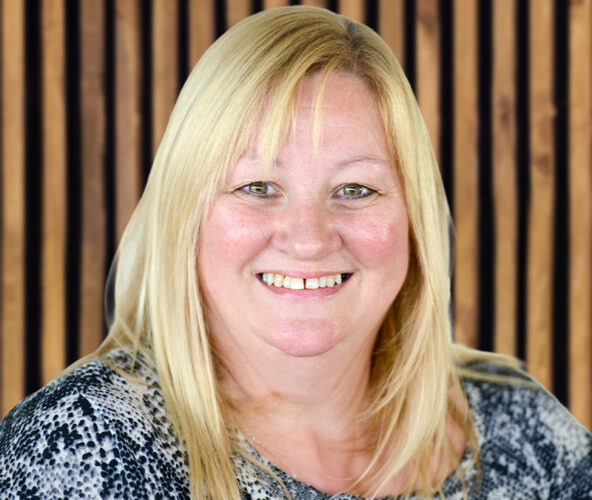
Tracey Garner TEP
STEP Practitioner & Senior Associate